

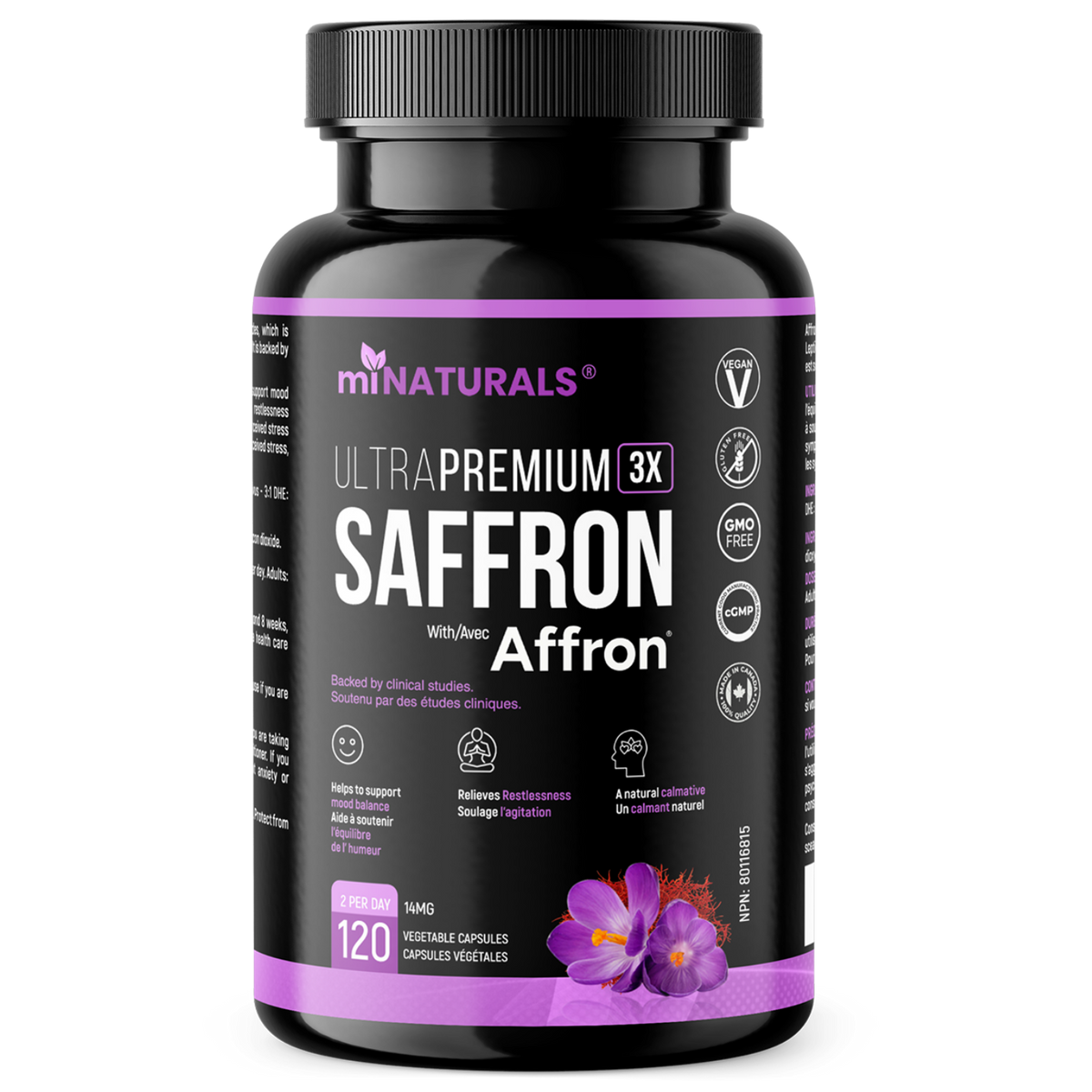


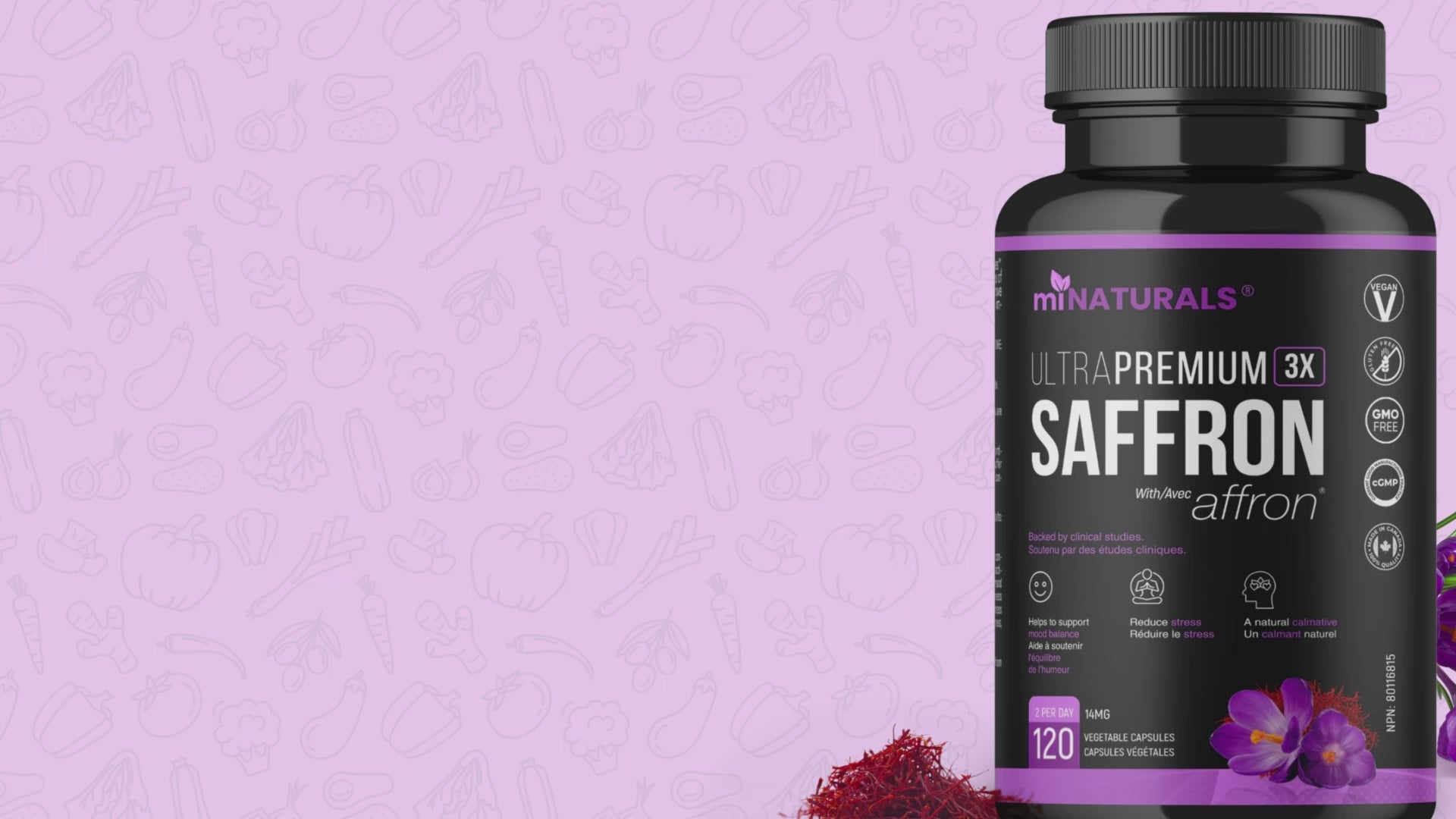


Ultra Premium Saffron with Affron
Tax excluded.

Prefer Amazon?  Buy on Amazon.ca
Research-Backed Ingredient
Supplement Facts
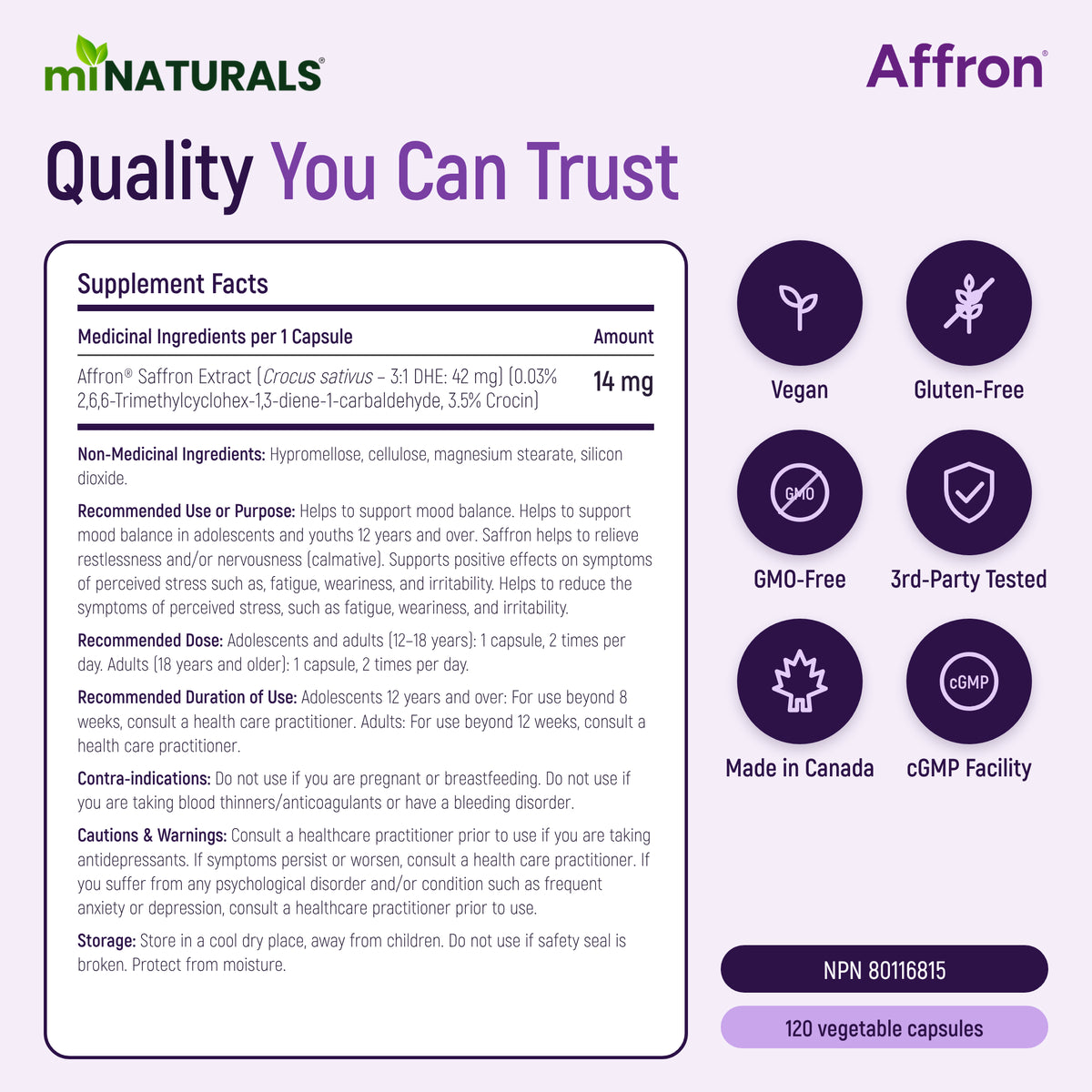
Supplement Facts
Recommended Use or Purpose: Helps to support mood balance. Helps to support mood balance in adolescents and youths 12 years and over. Saffron helps to relieve restlessness and/or nervousness (calmative). Supports positive effects on symptoms of perceived stress such as fatigue, weariness, and irritability. Helps to reduce the symptoms of perceived stress, such as fatigue, weariness, and irritability.
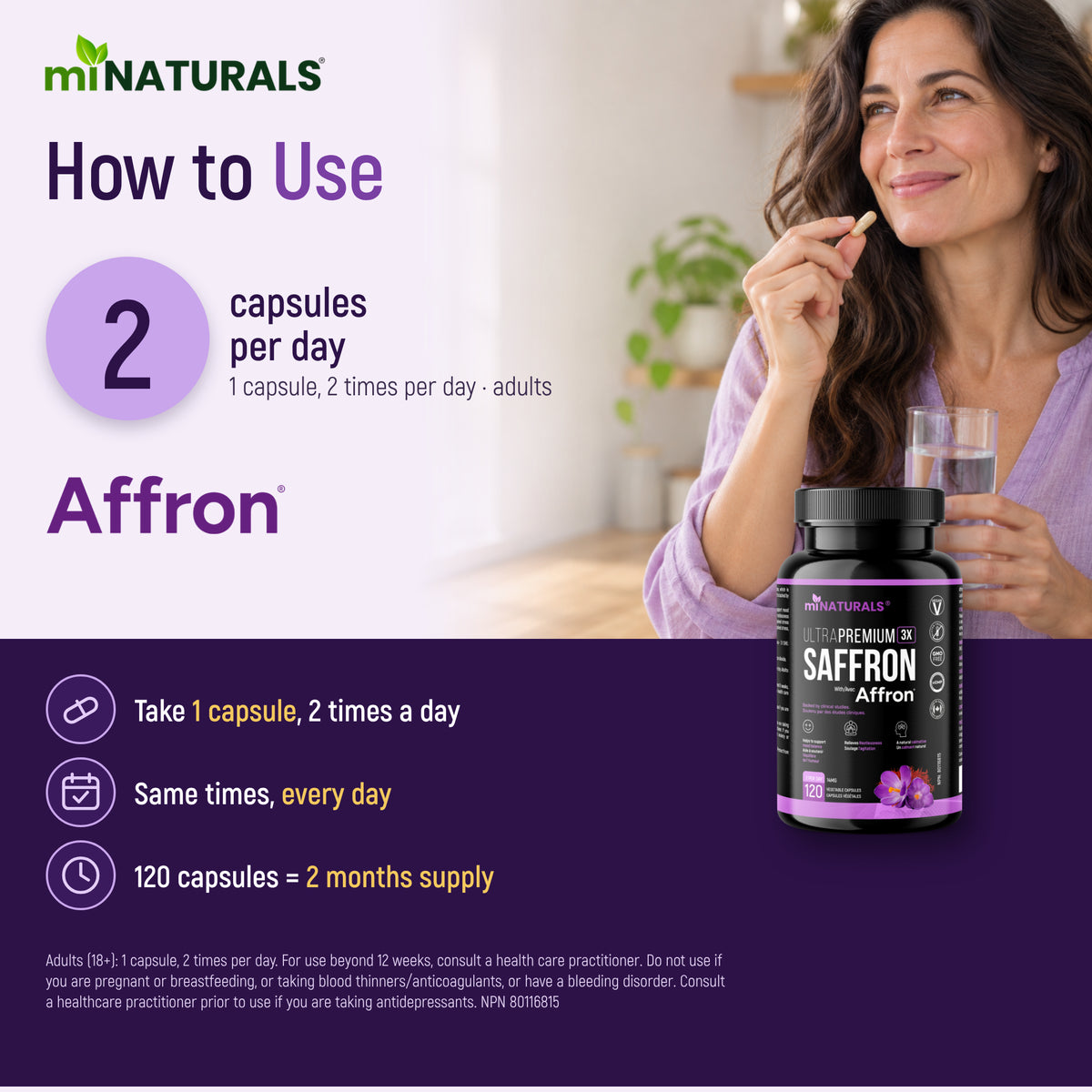
Recommended Dose: Adolescents and adults (12 - 18 years): 1 capsule, 2 times per day. Adults (18 years and older): 1 capsule, 2 times per day.
Recommended Duration of Use: Adolescents 12 years and over: For use beyond 8 weeks, consult a health care practitioner. Adults: For use beyond 12 weeks, consult a health care practitioner.
Non-Medicinal Ingredients: Hypromellose, cellulose, magnesium stearate, silicon dioxide.
Cautions & Warnings: Consult a healthcare practitioner prior to use if you are taking antidepressants. If symptoms persist or worsen, consult a health care practitioner. If you suffer from any psychological disorder and/or condition such as frequent anxiety or depression, consult a healthcare practitioner prior to use.
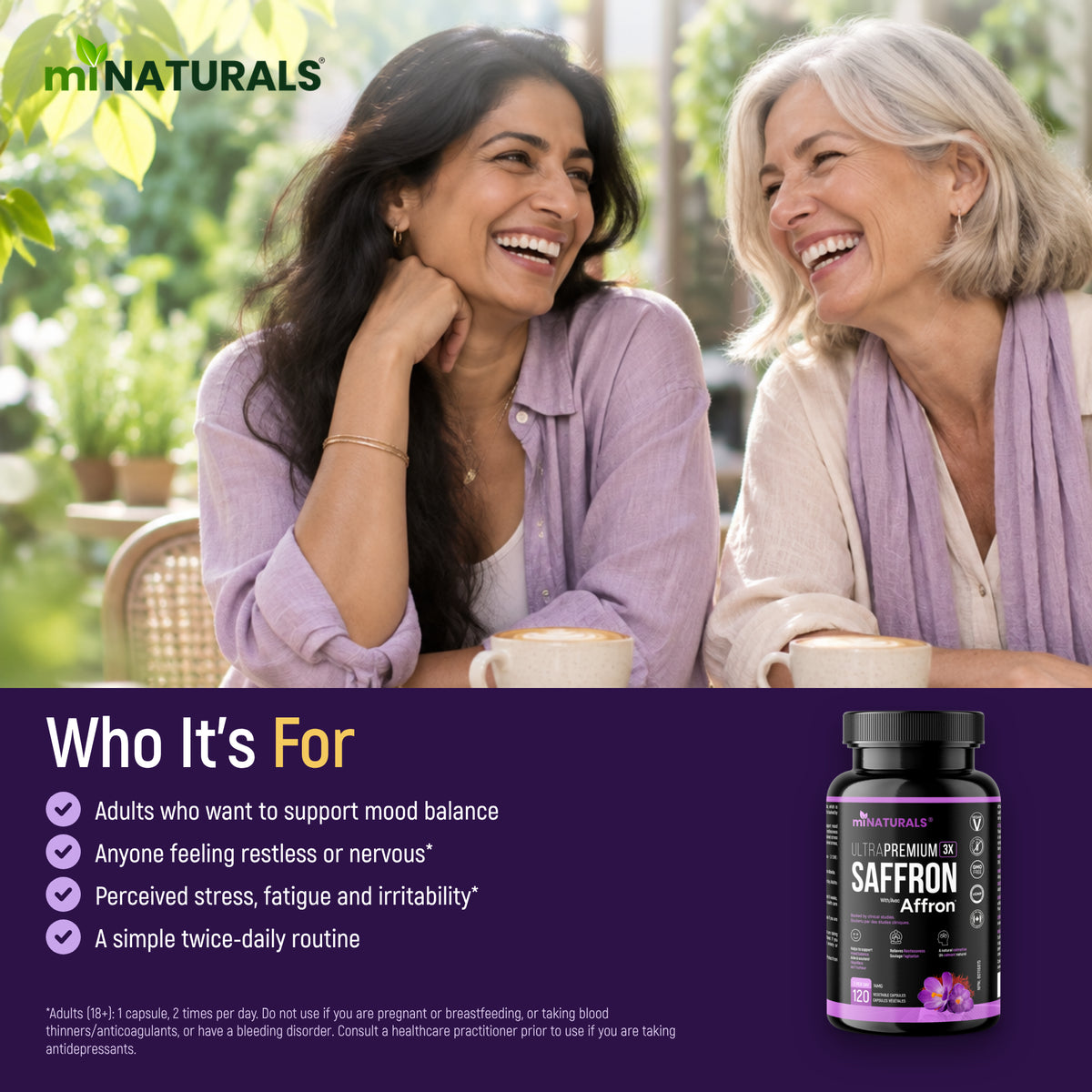
Contra-indications: Do not use if you are pregnant or breastfeeding. Do not use if you are taking blood thinners/anticoagulants or have a bleeding disorder.
Storage: Store in a cool dry place, away from children. Do not use if the safety seal is broken. Protect from moisture.
Supplement Summary
Money-Back Guarantee
Our policy lasts 30 days. If for any reason your are not satisfied with the product within 30 days, email us with an explanation and we will fully refund you.
Gift cards are non-returnable.
Returns are only accept for items that are unopened. To complete your return, we require a receipt or proof of purchase.
Refunds
Once your return is received and inspected, we will send you an email to notify you that we have received your returned item. We will also notify you of the approval or rejection of your refund.
If you are approved, then your refund will be processed, and a credit will automatically be applied to your credit card or original method of payment, within 3-5 business days.
Late or missing refunds
If you haven’t received a refund yet, first check your bank account again.
Then contact your credit card company, it may take some time before your refund is officially posted. Next contact your bank. There is often some processing time before a refund is posted.
If you’ve done all of this and you still have not received your refund yet, please contact us at ron@minaturalsnutrition.com.
Exchanges
We only replace items if they are unopened. If you need to exchange it for the same item, send us an email at ron@minaturalsnutrition.com and send your item to: 90 B Brunswick Blvd., Dollard-Des-Ormeaux, QC, H9B2C5, Canada.
Shipping
To return your product, you should mail your product to: 90 B Brunswick Blvd., Dollard-Des-Ormeaux, QC, H9B2C5, Canada.
You will be responsible for paying for your own shipping costs for returning your item. Shipping costs are non-refundable. If you receive a refund, the cost of return shipping will be deducted from your refund.
Depending on where you live, the time it may take for your exchanged product to reach you, may vary.
Choose options
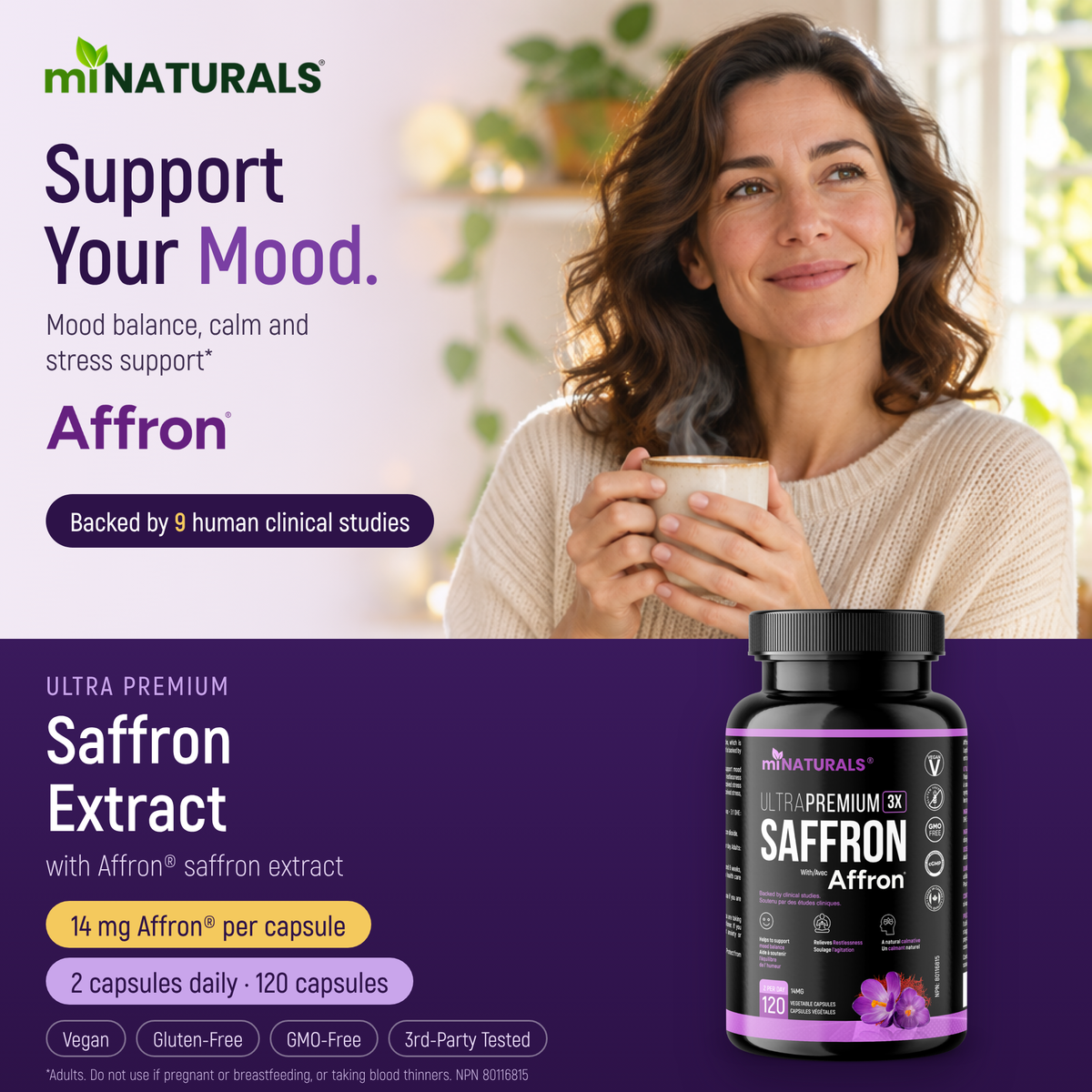
Daily support to help you feel your best
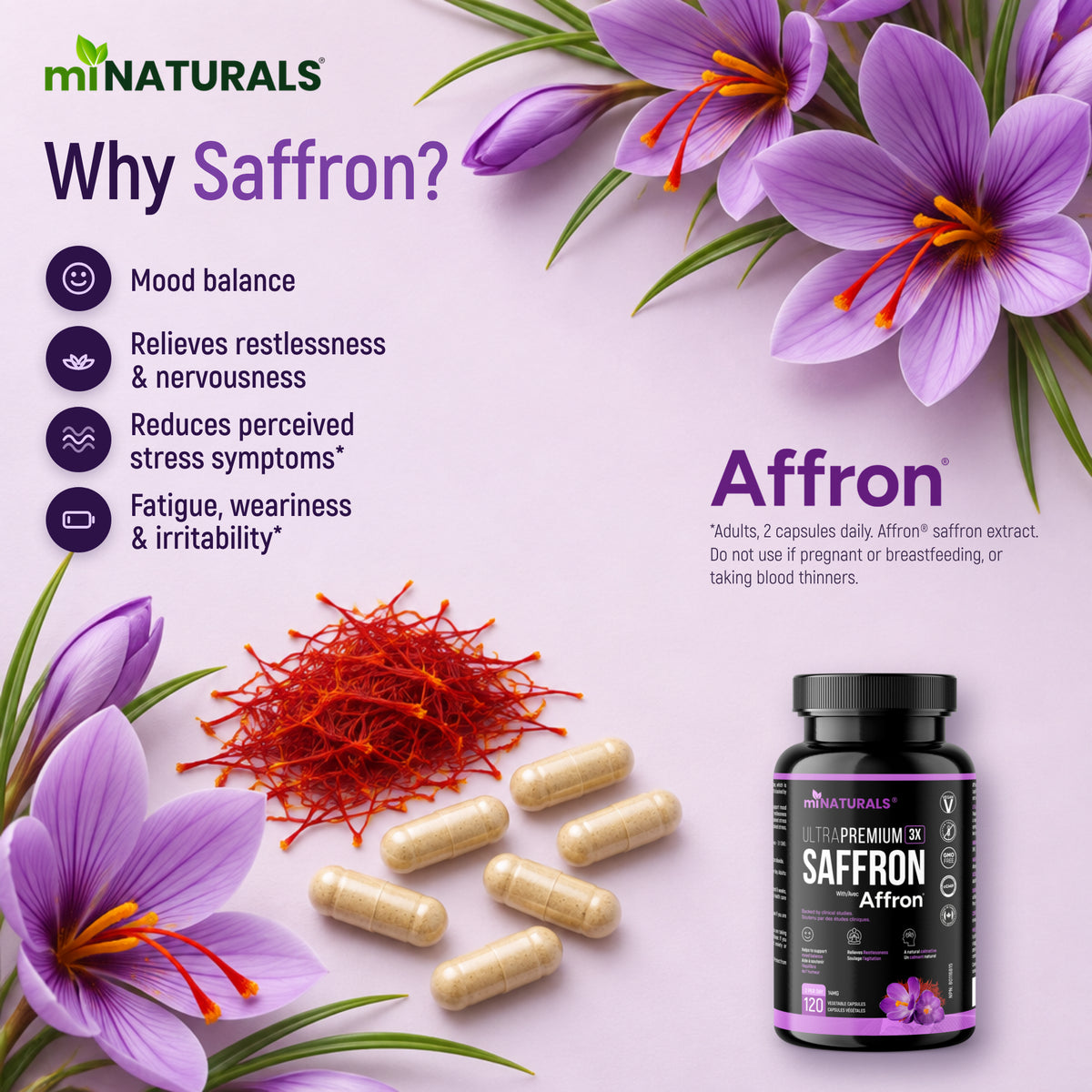
- Helps with mood balance.
- Can encourage good sleep.
- Helps to relieve restlessness and/or nervousness (calmative).
- A saffron supplement that helps to reduce the symptoms of perceived stress, such as fatigue, weariness, and irritability.
Product details
- Vegan, GMO-FREE, Gluten-Free.
- A saffron supplement made in a Canadian, cGMP certified facility.
- 3rd Party Tested.
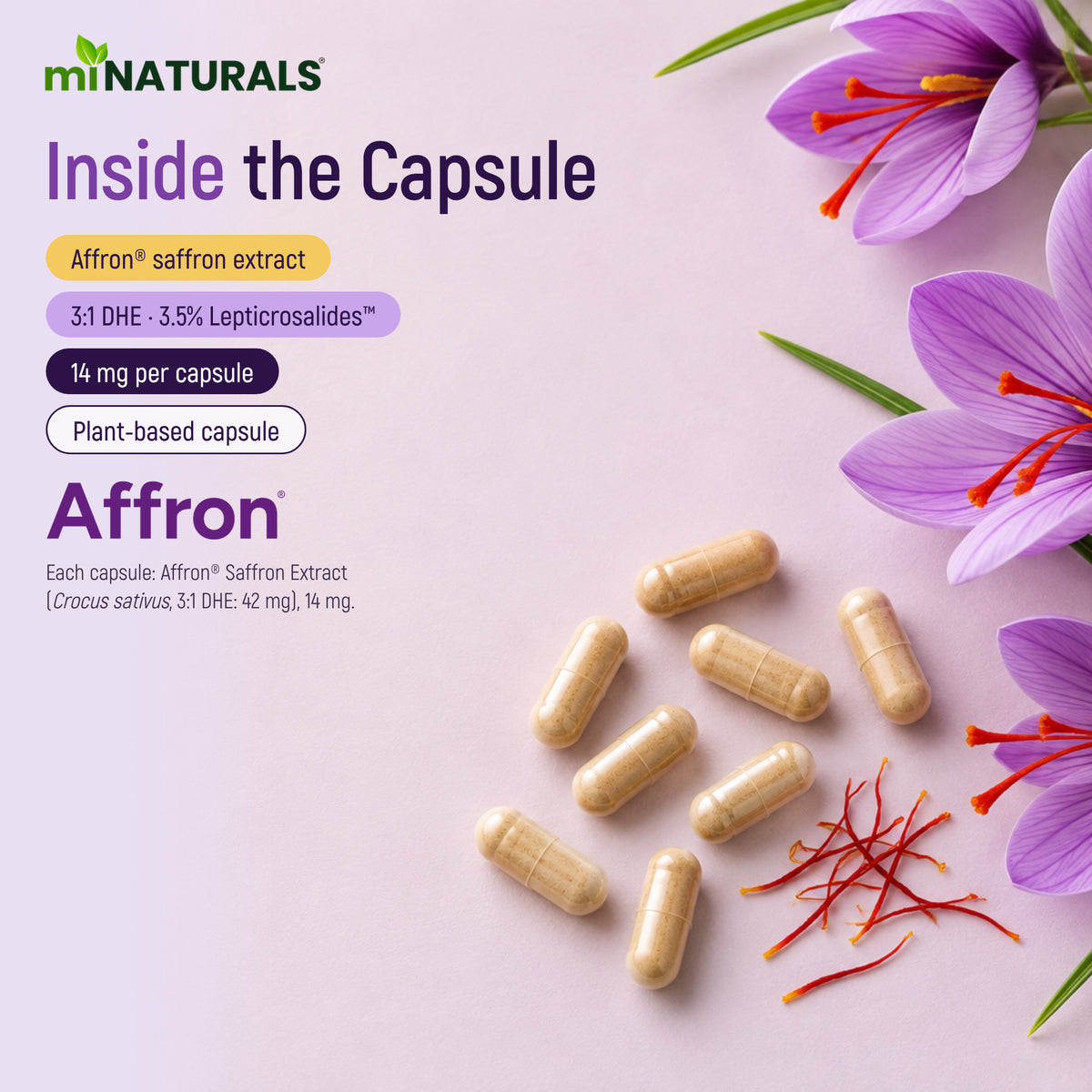
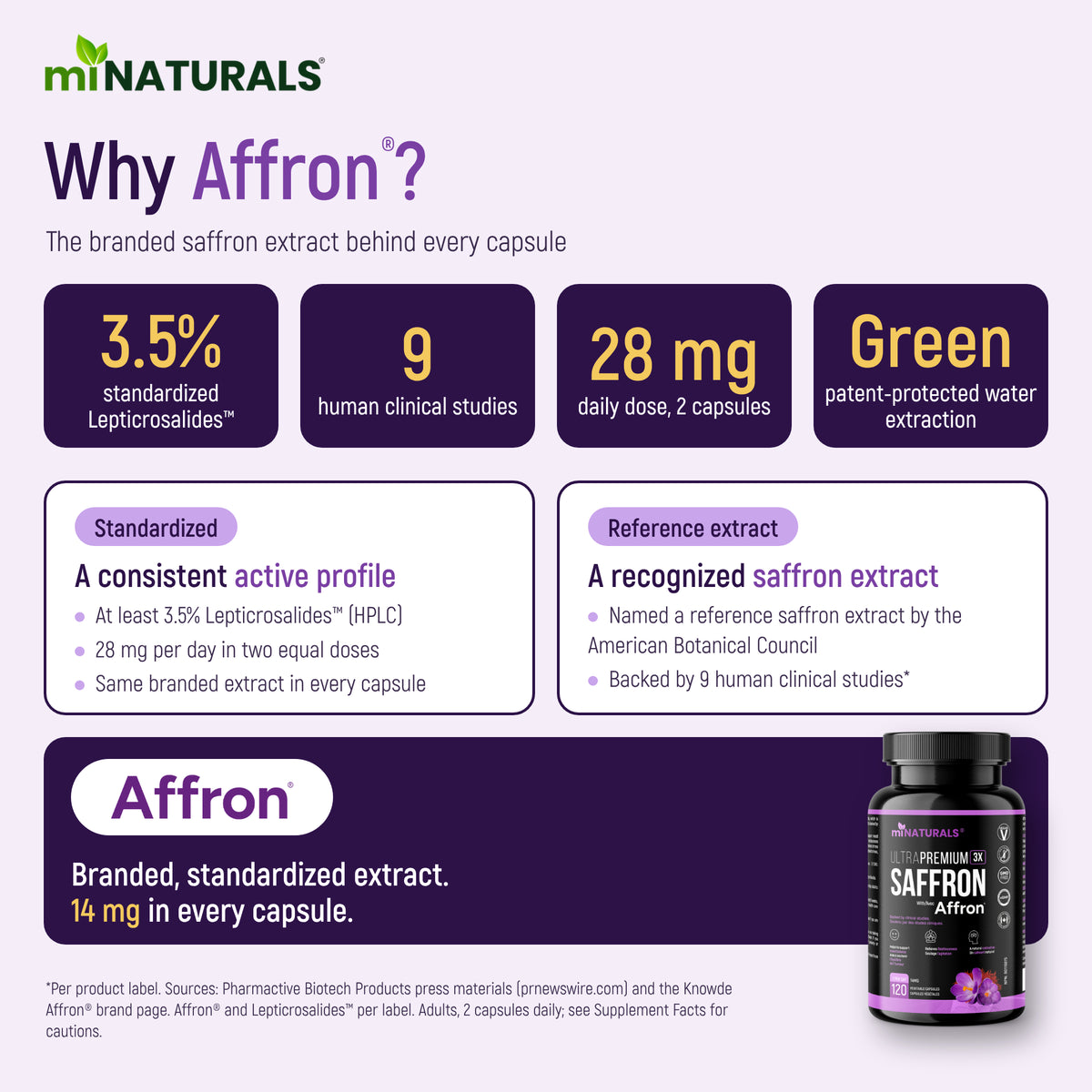
- Contains patented affron® Saffron (28 mg per serving)
- Health Canada Licensed: NPN 80116815
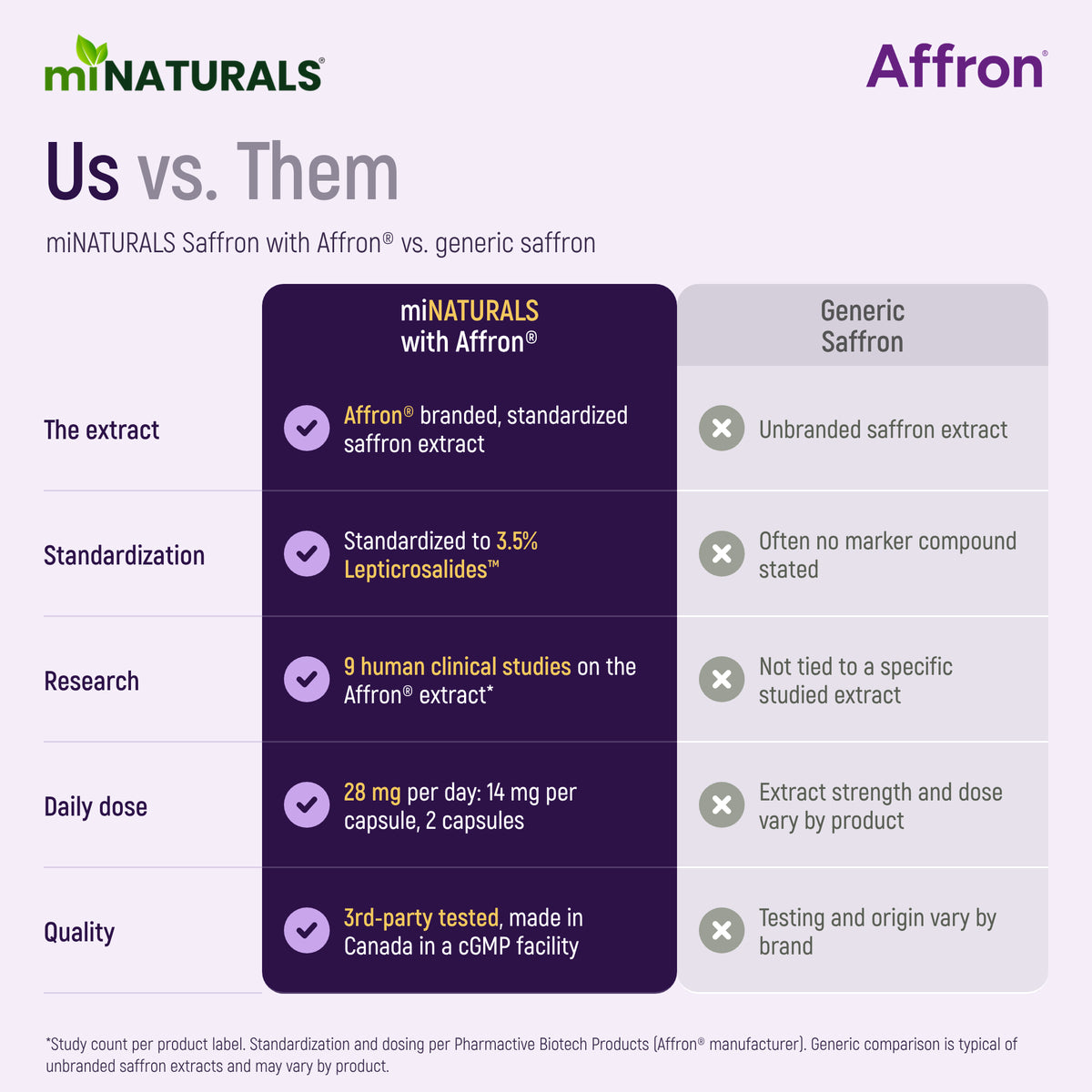
affron® vs. a generic ingredient
Comparison describes typical unbranded ingredients. Study counts are as reported by the ingredient supplier. affron® is a registered trademark of its owner.
The research behind affron®
-
Better self-reported mood after 4 weeks at 28 mg a day, compared with a placebo
In this study of 128 healthy adults who reported low mood (none had a diagnosis), participants took affron at 28 mg or 22 mg a day, or a placebo, for 4 weeks. Those taking 28 mg a day reported a better overall mood and less stress and tension than the placebo group; the 22 mg dose showed no difference. Worth knowing: results were self-reported.
Read the study → -
Teens aged 12 to 16 reported bigger improvements in mood and anxiety symptoms after 8 weeks than on a placebo
In this 8-week study, 80 young people aged 12 to 16 with mild-to-moderate low mood or anxiety symptoms were enrolled, and 68 finished. They took affron (14 mg twice a day) or a placebo. Based on what the teens reported themselves, those taking affron had larger improvements: overall symptom scores dropped about 33% vs 17% on placebo. Worth knowing: parents reported the improvements less consistently, and the study was funded by the ingredient maker.
Read the study → -
Better self-rated sleep quality over 28 days, compared with a placebo
In this study of 63 healthy adults aged 18 to 70 who said they slept poorly, participants took affron (14 mg twice a day) or a placebo for 28 days. The affron group reported larger improvements in sleep quality and in feeling rested than the placebo group, and no side effects were reported. Worth knowing: 55 people finished, sleep was self-reported.
Read the study → -
Better self-rated sleep and morning mood when taken in the evening for 28 days
In this study of 120 adults with unsatisfactory sleep, participants took 14 mg or 28 mg of affron, or a placebo, one hour before bed for 28 days. Both affron groups reported better sleep quality and better mood on waking than the placebo group, and evening melatonin levels rose. Worth knowing: several other sleep measures did not differ between groups, and sleep was self-reported.
Read the study → -
Bigger improvement in psychological symptoms through perimenopause, but no difference in hot flashes
In this 12-week study, 86 women going through perimenopause took 14 mg of affron twice a day or a placebo. The affron group had a bigger improvement in the psychological symptoms score, with about a 33% drop in anxiety scores and a 32% drop in low-mood scores from the start. Worth knowing: affron did not do better than placebo for hot flashes, physical symptoms or other quality-of-life measures.
Read the study → -
Men enjoyed exercise more and had higher heart rate variability; no difference in women
In this 6-week study, 62 adults who exercise regularly took 28 mg of affron a day or a placebo. In men, affron was linked to greater enjoyment of exercise and higher heart rate variability, a marker of recovery. Worth knowing: no such benefits were found in women.
Read the study → -
Better mood scores after 12 weeks at 28 mg a day: 72.3% had a meaningful improvement vs 54.3% on a placebo
In this 12-week study, 202 adults aged 18 to 70 who were experiencing low mood took 28 mg of affron a day or a placebo. The affron group had a bigger improvement on a mood questionnaire, and more of them had a meaningful improvement (72.3% vs 54.3% on placebo). Worth knowing: the other measures, including sleep and general wellbeing, did not differ between the groups overall, and the placebo group also improved a lot. The sleep benefit showed up only in people who started with more sleep disturbance.
Read the study → -
Women 50 to 70 reported bigger improvements in low mood and self-esteem after 12 weeks than on a placebo
In this 12-week study, 86 women aged 50 to 70 with low mood and poor sleep took 28 mg of affron a day or a placebo. Low-mood scores fell 50.7% on affron vs 31.9% on placebo, and self-esteem rose 10.0% vs 4.8%. Sleep-related impairment also improved. Worth knowing: sleep disturbance, self-rated appearance and estimated skin age did not differ, the self-esteem and sleep findings are described as exploratory, and the study was funded by the ingredient maker.
Read the study → -
Better sleep quality scores after 4 weeks in a small study of 21 adults
In this 4-week study of 21 healthy adults in Japan, sleep quality scores improved only in the group taking affron, and people who slept poorly at the start also had less daytime sleepiness than on placebo. Worth knowing: this was a very small study, and the detail here is from the supplier's summary.
-
Better self-rated sleep, plus faster sleep onset and more deep sleep on brain-wave recordings
In this 4-week study, 52 adults in Japan took affron or a placebo. The affron group reported better sleep, and brain-wave (EEG) recordings showed faster sleep onset, fewer awakenings at night and more deep sleep. Worth knowing: the detail here is from the supplier's summary, and the study was small.
Studies were conducted on the ingredient itself, not on this finished product. These statements have not been evaluated by Health Canada. This product is not intended to diagnose, treat, cure or prevent any disease.