

Why we choose affron® for our Formula
Not all saffron is the same. Here is why we picked a standardized, patented, research-backed saffron extract to help you support a balanced mood, handle everyday stress and sleep more restfully.
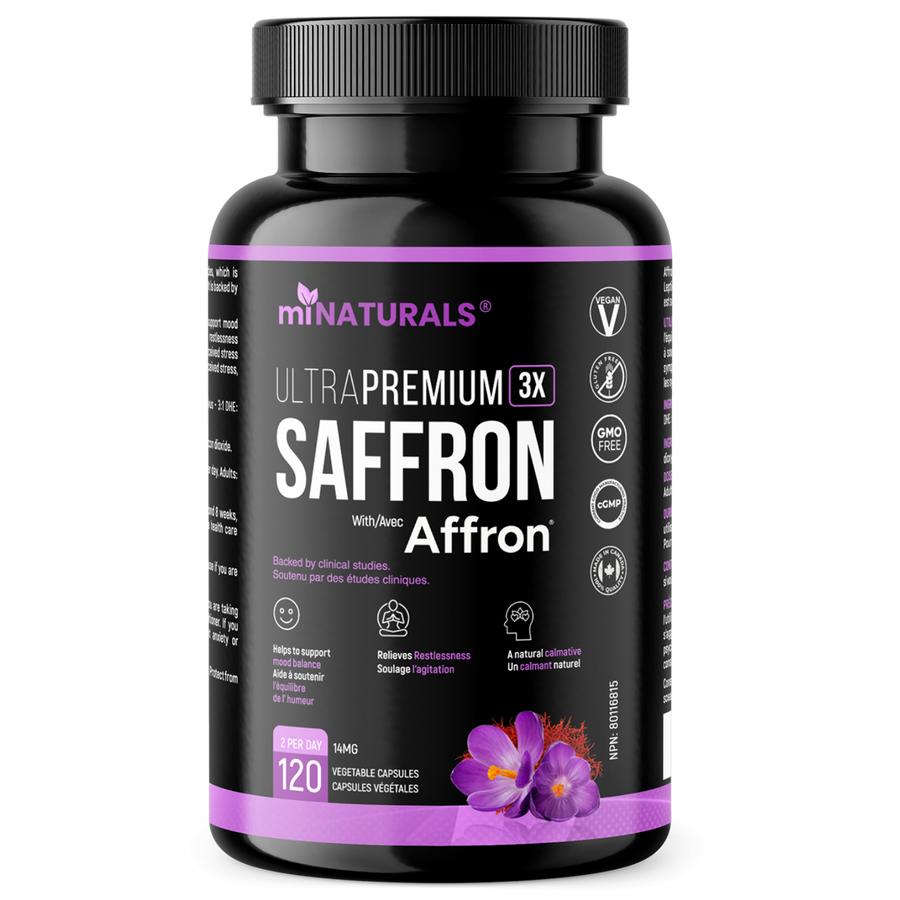
What it’s here to support
affron was tested in adults in studies on mood, everyday stress and sleep. Here is what that means for you, in plain language.


A brighter mood
Supports a positive, balanced mood in everyday life.
Measured: mood questionnairesEasing everyday stress
Supports a relaxed feeling when tension and irritability build up.
Measured: stress and tension ratingsBetter sleep quality
Supports sleep quality in adults who sleep poorly.
Measured: self-rated sleep qualityWaking up refreshed
Supports feeling rested and alert after sleep.
Measured: restorative sleep and morning moodMidlife mood balance
Supports mood balance in women going through menopause.
Measured: menopause symptom scaleMore enjoyment from exercise
Supports how good being active feels. In the one study, the benefit was seen in men, not in women.
Measured: exercise enjoyment ratingsResults varied between studies, and some measures showed no difference from placebo. That is why every study is listed below with a link to the paper, so you can read them yourself.

Meet the plant: saffron crocus
Saffron is one of the best-known ancient spices. It has been used for thousands of years, and the oldest known reference to harvesting it is a fresco from Crete dating to about 1600 to 1700 BC (per the supplier).
- Plant Crocus sativus, an autumn-flowering perennial
- Part used The dried stigma, the red thread inside the flower
- Rarity Each plant has only three stigmas
- Tradition Used for centuries as a calming, soothing herb
Generic saffron vs. affron®
The research, in one picture
In a 12-week study of 202 adults experiencing low mood, 72.3% of people taking affron had a meaningful improvement on a mood questionnaire, compared with 54.3% of people taking a placebo.
Why does the placebo group improve too? People in studies often feel better just from taking part and being cared for. That is why researchers always compare against a placebo, and why the gap between the two groups is what counts.
See the product →The studies behind affron®
Tap a study to read a plain-language summary, then open the full paper.
2026Women 50 to 70 reported bigger improvements in low mood and self-esteem after 12 weeks than on a placebo
In this 12-week study, 86 women aged 50 to 70 with low mood and poor sleep took 28 mg of affron a day or a placebo. Low-mood scores fell 50.7% on affron vs 31.9% on placebo, and self-esteem rose 10.0% vs 4.8%. Sleep-related impairment also improved. Worth knowing: sleep disturbance, self-rated appearance and estimated skin age did not differ, the self-esteem and sleep findings are described as exploratory, and the study was funded by the ingredient maker.
Open the study →2025Better mood scores after 12 weeks at 28 mg a day: 72.3% had a meaningful improvement vs 54.3% on a placebo
In this 12-week study, 202 adults aged 18 to 70 who were experiencing low mood took 28 mg of affron a day or a placebo. The affron group had a bigger improvement on a mood questionnaire, and more of them had a meaningful improvement (72.3% vs 54.3% on placebo). Worth knowing: the other measures, including sleep and general wellbeing, did not differ between the groups overall, and the placebo group also improved a lot. The sleep benefit showed up only in people who started with more sleep disturbance.
Open the study →2022Men enjoyed exercise more and had higher heart rate variability; no difference in women
In this 6-week study, 62 adults who exercise regularly took 28 mg of affron a day or a placebo. In men, affron was linked to greater enjoyment of exercise and higher heart rate variability, a marker of recovery. Worth knowing: no such benefits were found in women.
Open the study →2021Better self-rated sleep and morning mood when taken in the evening for 28 days
In this study of 120 adults with unsatisfactory sleep, participants took 14 mg or 28 mg of affron, or a placebo, one hour before bed for 28 days. Both affron groups reported better sleep quality and better mood on waking than the placebo group, and evening melatonin levels rose. Worth knowing: several other sleep measures did not differ between groups, and sleep was self-reported.
Open the study →2021Bigger improvement in psychological symptoms through perimenopause, but no difference in hot flashes
In this 12-week study, 86 women going through perimenopause took 14 mg of affron twice a day or a placebo. The affron group had a bigger improvement in the psychological symptoms score, with about a 33% drop in anxiety scores and a 32% drop in low-mood scores from the start. Worth knowing: affron did not do better than placebo for hot flashes, physical symptoms or other quality-of-life measures.
Open the study →2020Better self-rated sleep quality over 28 days, compared with a placebo
In this study of 63 healthy adults aged 18 to 70 who said they slept poorly, participants took affron (14 mg twice a day) or a placebo for 28 days. The affron group reported larger improvements in sleep quality and in feeling rested than the placebo group, and no side effects were reported. Worth knowing: 55 people finished, sleep was self-reported.
Open the study →2020Better self-rated sleep, plus faster sleep onset and more deep sleep on brain-wave recordings
In this 4-week study, 52 adults in Japan took affron or a placebo. The affron group reported better sleep, and brain-wave (EEG) recordings showed faster sleep onset, fewer awakenings at night and more deep sleep. Worth knowing: the detail here is from the supplier's summary, and the study was small.
2018Teens aged 12 to 16 reported bigger improvements in mood and anxiety symptoms after 8 weeks than on a placebo
In this 8-week study, 80 young people aged 12 to 16 with mild-to-moderate low mood or anxiety symptoms were enrolled, and 68 finished. They took affron (14 mg twice a day) or a placebo. Based on what the teens reported themselves, those taking affron had larger improvements: overall symptom scores dropped about 33% vs 17% on placebo. Worth knowing: parents reported the improvements less consistently, and the study was funded by the ingredient maker.
Open the study →2018Better sleep quality scores after 4 weeks in a small study of 21 adults
In this 4-week study of 21 healthy adults in Japan, sleep quality scores improved only in the group taking affron, and people who slept poorly at the start also had less daytime sleepiness than on placebo. Worth knowing: this was a very small study, and the detail here is from the supplier's summary.
2017Better self-reported mood after 4 weeks at 28 mg a day, compared with a placebo
In this study of 128 healthy adults who reported low mood (none had a diagnosis), participants took affron at 28 mg or 22 mg a day, or a placebo, for 4 weeks. Those taking 28 mg a day reported a better overall mood and less stress and tension than the placebo group; the 22 mg dose showed no difference. Worth knowing: results were self-reported.
Open the study →What to expect, and when
The studies tested daily use, and results built up over time. Think of it as a habit, not a quick fix.
The first week
In one sleep study, most of the change in sleep ratings happened in the first 7 days (per the supplier).
Around 4 weeks
Several studies on mood and sleep measured results after 4 weeks of daily use.
12 weeks
The largest study, and a menopause study, ran for 12 weeks of daily use.
Sleep and midlife, in numbers
Here are some of the figures reported for affron®. Each one comes from a study on the ingredient, not on our finished product, and results were self-reported.
Sleep severity and restorative sleep
In a 28-day sleep study, the supplier reports a 25% lower insomnia severity score and a 20% higher restorative sleep score, and 96% of people on affron said they were satisfied.
Source: supplier brochure (April 2024)Women aged 50 to 70
In a 12-week study of women with low mood and poor sleep, low-mood scores fell 50.7% on affron vs 31.9% on placebo. Self-esteem rose 10.0% vs 4.8%, and sleep-related impairment improved. Sleep disturbance itself did not differ, and the self-esteem and sleep findings were exploratory.
Lopresti & Smith, Frontiers in Nutrition, 2026A possible sleep pathway
In the evening-dosing study, melatonin levels rose in the evening. In a rat study, affron raised melatonin and lowered kynurenine, a compound linked to the stress pathway. Animal results do not tell us what happens in people.
Lopresti et al., Sleep Medicine, 2021; Antioxidants, 2023Who it’s for
 Busy, stressed adultsJuggling work, family and everyday tensionRestless sleepersWho want to wake up feeling rested
 Women in midlifeLooking for mood balance through menopauseActive adultsWho want to enjoy their workouts more
 Teens 12+Supports mood balance in youths 12 and over. Ask a health professional first.
From field to shelf
According to the supplier, affron is made in-house in Spain under strict quality standards and carries these credentials.
* The affron® ingredient itself is Halal and Kosher, per the supplier. However, our finished supplement was not manufactured in a Halal- or Kosher-certified facility, so our product is not certified Halal or Kosher.
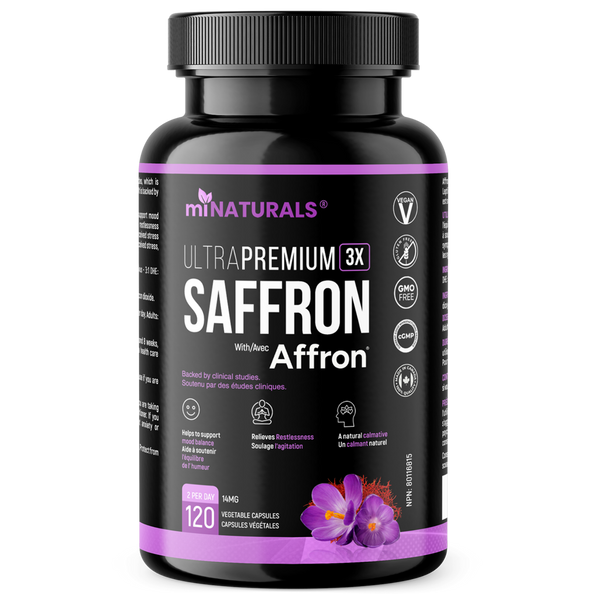
In every capsule of Ultra Premium Saffron
Ultra Premium Saffron with Affron is made with affron®, so you get a standardized extract with a research library behind it.
Shop Ultra Premium SaffronInformation about affron comes from the ingredient supplier (Pharmactive Biotech Products) and from published studies on the ingredient itself, not on this finished product. These statements have not been evaluated by Health Canada. This product is not intended to diagnose, treat, cure or prevent any disease. affron is a trademark of its owner.