NMN vs NAD+: 5 Differences Worth Knowing After 45
If you have searched "NMN vs NAD," you have probably seen the two names used as if they were the same thing. They are not. NAD+ is the coenzyme your cells use every day. NMN is one of the building blocks your body uses to make it.
That difference matters when you read a supplement label. This guide explains what each one is, how they connect, and what to look for if you are over 45 and thinking about healthy aging.
Key Takeaways
- NAD+ (nicotinamide adenine dinucleotide) is a coenzyme found in every cell and used in energy metabolism.
- NMN (nicotinamide mononucleotide) is a NAD+ precursor: the body converts it into NAD+ in a single step.
- So NMN is not "the same as NAD." It is one route the body uses to build NAD+.
- Most research on raising NAD+ levels looks at precursors such as NMN and NR, not NAD+ itself.
- The form of NMN matters. Uthever® is a patented NMN with its own clinical research.
What is NAD+?
NAD+ stands for nicotinamide adenine dinucleotide. It is a coenzyme, a helper molecule that enzymes need to do their work. The body makes it from forms of vitamin B3, and hundreds of enzymes depend on it, according to the U.S. National Institutes of Health.
Its best-known job is energy metabolism: helping turn the food you eat into energy your cells can use. NAD+ also takes part in many other routine processes that keep cells running.
Researchers have reported that NAD+ levels tend to be lower in older tissues. A 2021 review in Nutrients points out that this pattern is not seen in every tissue or every study, so the picture is still being worked out. That open question is a big part of why NAD+ has become such a popular research topic.
What is NMN?
NMN stands for nicotinamide mononucleotide. It is a naturally occurring molecule and a direct precursor of NAD+. In the body, an enzyme adds one more piece to NMN, and the result is NAD+. Scientists describe this pathway in detail in a review of NMN and NR biology in Cell Metabolism.
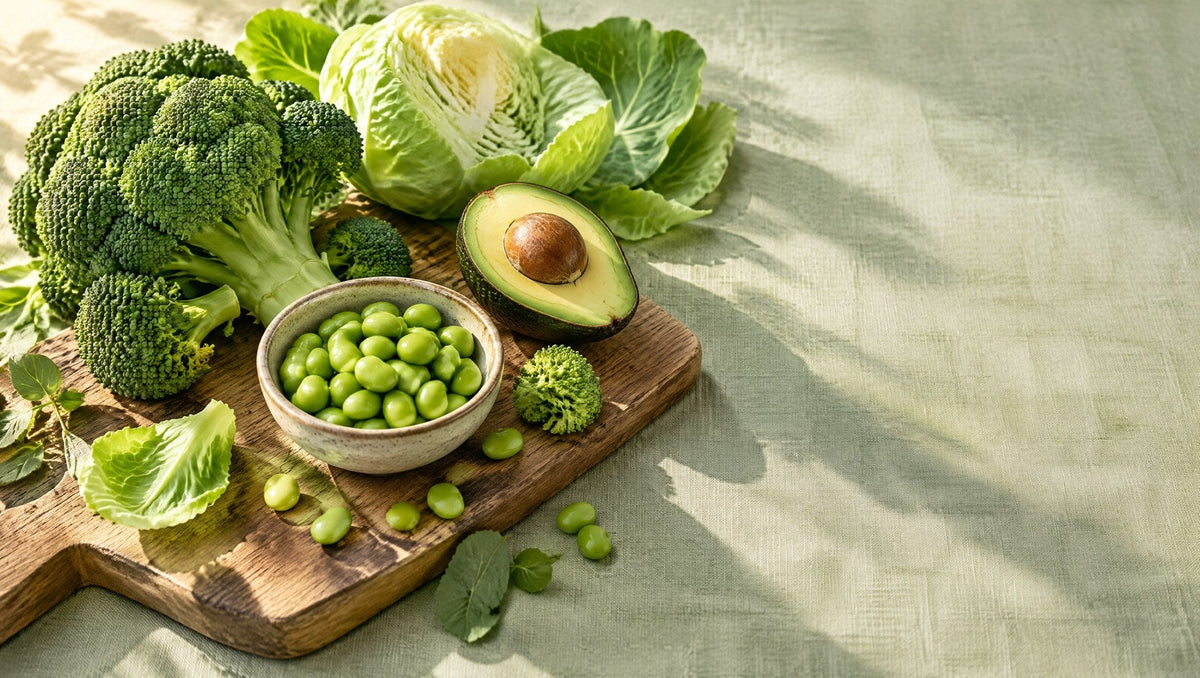
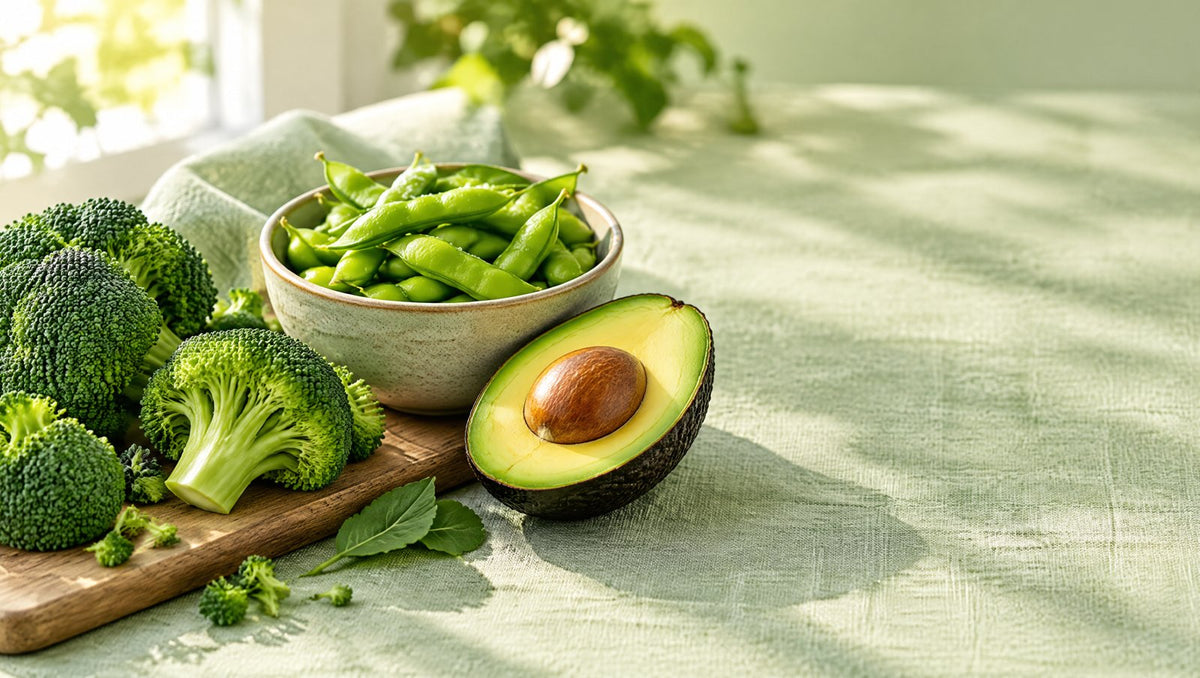
NMN is also found in small amounts in everyday foods such as edamame, broccoli, cabbage, cucumber and avocado, as summarized in a review of NMN research in Biomolecules. The amounts in food are small, which is why people interested in NMN often look at supplements.
 Broccoli and edamame are among the foods that contain small amounts of NMN.
Is NMN the same as NAD?
No. The simplest way to picture it: NMN is an ingredient, and NAD+ is the finished dish. Your body takes NMN and turns it into NAD+.
Here is how the two compare side by side.
| NMN | NAD+ | |
|---|---|---|
| Full name | Nicotinamide mononucleotide | Nicotinamide adenine dinucleotide |
| What it is | A precursor (building block) | A coenzyme (the working molecule) |
| Role in the body | Converted into NAD+ | Used by enzymes in energy metabolism and other cell processes |
| Found in food | Small amounts in some vegetables and fruit | Made inside cells |
| Steps to NAD+ | One step | It is NAD+ |
| Main focus of supplement research | Yes, along with NR | Less common as an oral supplement |
Is NMN better than NAD?
This question comes up often, but it compares two things that do different jobs. NAD+ is what your cells actually use. NMN is one way to give the body what it needs to make more of it.
When scientists study ways to support NAD+ levels, they mostly test precursors. A 2025 review of NAD+ precursor supplementation in human ageing focuses on NMN and nicotinamide riboside (NR) for that reason. The same reviewers note that human research is still young, and many questions remain open.
So rather than "better," a fairer way to put it is this: NMN is one of the precursors researchers study most, alongside NR, and it sits only one step away from NAD+.
5 differences that matter when you shop
- The name on the label. A product sold as "NAD+" and a product sold as "NMN" contain different molecules. Read the medicinal ingredient line, not just the front of the bottle.
- The form of the ingredient. Not all NMN is the same. Patented forms are usually backed by their own research and quality data, so ask which form a product uses.
- The studied dose. Research is done at specific amounts. Follow the dose on a licensed product's label rather than guessing, and more is not automatically better.
- The licence. In Canada, look for an eight-digit NPN. It means Health Canada has reviewed the product's safety, quality and label claims.
- The claims. Be wary of any NMN or NAD+ product that promises to reverse aging. Our article on whether NMN reverses aging looks at what the research really says.
 Supplements work best alongside everyday habits like regular movement and balanced meals.
Where NMN fits in a healthy-aging routine
NMN is not a shortcut, and it does not replace the basics. Sleep, movement, a plate full of vegetables and regular check-ups with your doctor still matter most. If you want ideas, our guide to heart-health habits worth building after 50 is a good place to start.
For adults who want to add a NAD+ precursor to those habits, the questions are practical: which form, how much and when. Our earlier articles on what NMN supplements do and when to take NMN cover those in more depth.
Our choice: Ultra Premium NMN with Uthever®

We chose Uthever® for our Ultra Premium NMN with Uthever® because the form of the ingredient matters. Uthever® is the most researched NMN in the world, and Uthever® was clinically studied to increase NAD+ by 38% in 60 days.
What our product does, in the words approved by Health Canada:
- Acts as a NAD+ precursor, supporting biological functions vital for good health.
- Aids in energy metabolism and tissue formation.
- Helps maintain the body's ability to metabolize nutrients.
It is Health Canada licensed (NPN 80140941), made in Canada in a cGMP-certified facility, and third-party tested. It is also vegan, GMO-free and gluten-free.
If NMN is one part of your healthy-aging plan, you can also explore the rest of our Ultra Premium line, such as Ultra Premium Shilajit with Primavie®, which is built on patented, clinically studied ingredients.
FAQ
Is NMN the same as NAD?
No. NMN (nicotinamide mononucleotide) is a precursor, and NAD+ (nicotinamide adenine dinucleotide) is the coenzyme the body makes from it. The body converts NMN into NAD+ in one step, which is why NMN is often called a NAD+ precursor.
Is NMN better than NAD?
They do different jobs, so "better" is not quite the right question. NAD+ is the molecule your cells use. NMN is a building block the body turns into NAD+. Most research on supporting NAD+ levels has studied precursors such as NMN and NR.
Can you get NMN from food?
Yes, in small amounts. Reviews list foods such as edamame, broccoli, cabbage, cucumber and avocado as natural sources. The amounts are small, so a balanced diet is a good base, and a supplement is an option for people who want more.
Who should talk to a doctor before taking NMN?
Anyone who takes medication, has a health condition, or is pregnant or breastfeeding should check with a doctor or pharmacist first. Natural does not mean free of interactions.
The bottom line
NMN and NAD+ are closely linked, but they are not the same. NAD+ is the coenzyme your cells use, and NMN is a direct precursor the body turns into it. When you compare products, look past the front label to the form of the ingredient, the dose, the NPN and the claims.
If you would like to try a patented, licensed form, see miNATURALS Ultra Premium NMN with Uthever®. It is also available on Amazon.ca.
This article is for information only and is not medical advice. If you take medication or have a health condition, check with your doctor or pharmacist before starting a supplement.