What Is an NMN Supplement? A Plain-Language Guide After 45
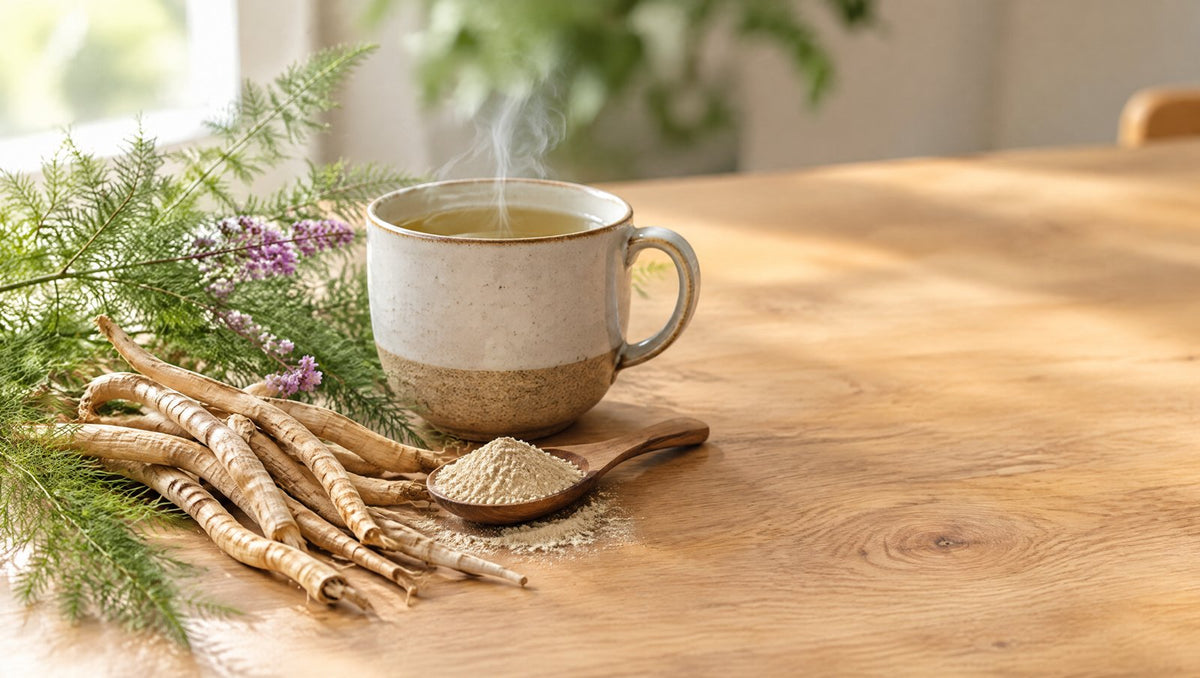
What is an NMN supplement? It is a supplement that contains nicotinamide mononucleotide, a molecule your body already makes and uses to build NAD+. NAD+ is a coenzyme that every cell relies on for energy metabolism.
That is the short answer. Below, we explain what the letters stand for, where NMN comes from, how a supplement is made and what to check on the label if you are over 45 and thinking about healthy aging.
Key Takeaways
- NMN stands for nicotinamide mononucleotide. It is a direct precursor of NAD+, a coenzyme used in energy metabolism.
- Your body makes NMN on its own, mainly by recycling a form of vitamin B3.
- NMN occurs naturally in foods such as broccoli, cabbage, avocado and tomato, but only in very small amounts.
- Supplement NMN is made by manufacturers, so the form, purity and dose differ from brand to brand.
- In Canada, look for an NPN on the label. It shows Health Canada has reviewed the product.
What does NMN stand for?
NMN stands for nicotinamide mononucleotide. Each part of the name tells you something:
- Nicotinamide is a form of vitamin B3.
- Mono means one.
- Nucleotide is a small building block made of a base, a sugar and a phosphate group.
Put together, NMN is a vitamin B3–based nucleotide. Its main job is to serve as a stepping stone to NAD+ (nicotinamide adenine dinucleotide). NAD+ is the working molecule. NMN is one of the pieces the body uses to make it.
How does NMN work in the body?
Your cells are always using NAD+ and rebuilding it. A large share of that rebuilding happens through what scientists call the salvage pathway. The body takes nicotinamide, turns it into NMN, and then turns NMN into NAD+ in one more step. A review of NMN research in Biomolecules describes this pathway and the enzymes involved.
Why does NAD+ matter? According to the U.S. National Institutes of Health, hundreds of enzymes depend on NAD+ and its related forms. Its best-known role is helping turn food into energy the cells can use.
Researchers have also reported that NAD+ levels tend to be lower in some older tissues. A 2021 review in Nutrients notes that this is not seen in every tissue or every study. That open question is a big reason NMN and other NAD+ precursors are studied so much today. For a closer look at how the two compare, see our article on what NMN supplements do.
Can you get NMN naturally from food?
Yes, but in small amounts. The Biomolecules review lists these ranges per 100 g:
| Food | NMN per 100 g |
|---|---|
| Broccoli | 0.25–1.12 mg |
| Cabbage | 0.0–0.90 mg |
| Avocado | 0.36–1.60 mg |
| Tomato | 0.26–0.30 mg |
| Raw beef | 0.06–0.42 mg |
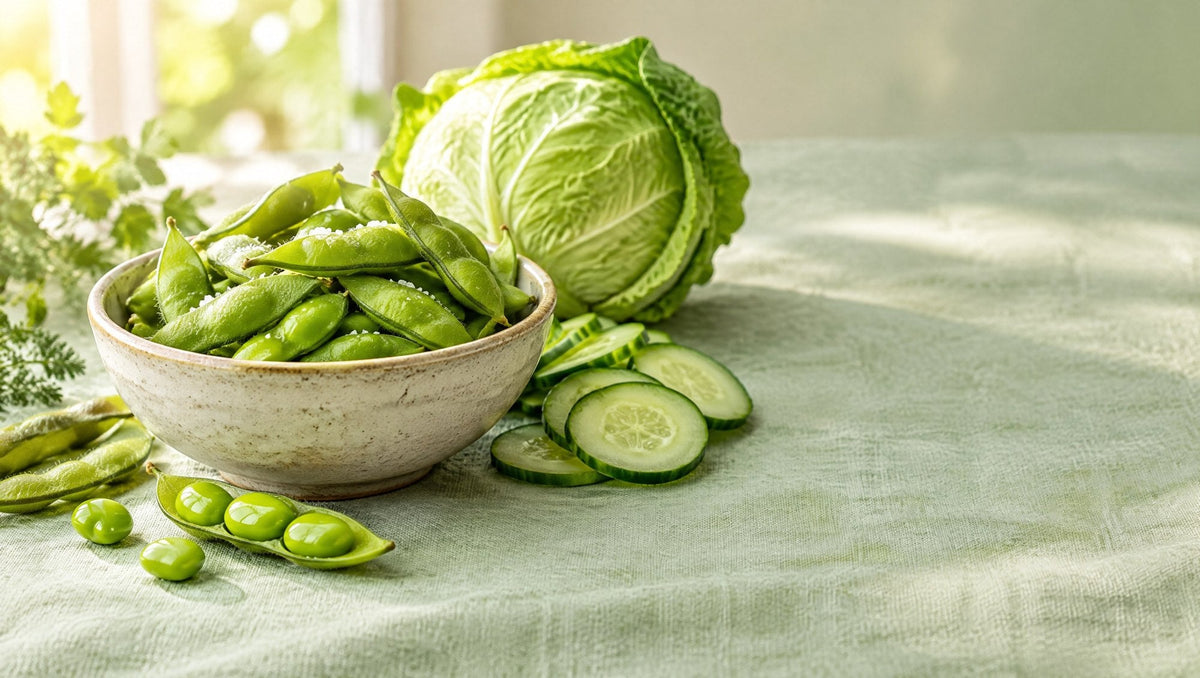
The 2021 Nutrients review also lists cucumber and soybeans (edamame are young soybeans) among food sources of NAD+ precursors. These foods are worth eating for many reasons, from fibre to vitamins. Still, a typical serving holds a milligram or two of NMN at most.
 Vegetables like broccoli and cabbage contain small amounts of NMN, along with fibre and vitamins.
A plate full of vegetables is a great base for healthy aging. People who want a measured amount of NMN on top of that usually look at a supplement.
How is an NMN supplement made?
Supplement NMN is not squeezed out of broccoli. The amounts in food are far too small for that. Instead, manufacturers produce NMN as a purified ingredient, which is then put into capsules or powders.
Production methods differ from one supplier to the next. That is why two products that both say "NMN" on the front can differ in:
- Form. Some brands use a patented, branded NMN with its own research. Others use a generic powder.
- Purity. Look for a brand that has its products tested by an independent lab.
- Dose. Research uses specific amounts. A licensed label tells you how much is in each capsule and how many to take.
- Other ingredients. Some formulas pair NMN with other ingredients. Read the full medicinal ingredient list.
 Supplement NMN is produced as a purified ingredient, so quality checks matter.
What is an NMN supplement used for?
People usually take NMN as part of a healthy-aging routine. They want to support their body's NAD+ supply as they get older. Our article on whether NMN can reverse aging looks at what the research does and does not show.
It helps to keep expectations clear. NMN is not a shortcut, and it does not replace sleep, movement, a good diet or regular check-ups. Human research on NAD+ precursors is still young. A 2025 review of NAD+ precursors in human ageing makes that point, while noting that NMN and NR are the precursors researchers study most.
Is NMN supplement available in Canada?
Yes. NMN products can be sold in Canada as natural health products when Health Canada has licensed them. A licensed product carries an eight-digit NPN (Natural Product Number) on its label. The NPN shows Health Canada has reviewed the product's safety, quality and label claims.
Our guide on where to get NMN in Canada walks through what to look for when you shop.
Our choice: Ultra Premium NMN with Uthever®

When we built our Ultra Premium NMN with Uthever®, we chose a patented form instead of a generic powder. Uthever® is the most researched NMN in the world, and Uthever® was clinically studied to increase NAD+ by 38% in 60 days.
What our product does, in the words approved by Health Canada:
- Acts as a NAD+ precursor, supporting biological functions vital for good health.
- Aids in energy metabolism and tissue formation.
- Helps maintain the body's ability to metabolize nutrients.
It is Health Canada licensed (NPN 80140941), made in Canada in a cGMP-certified facility and third-party tested. It is also vegan, GMO-free and gluten-free.
If you are building a healthy-aging routine, you may also like Ultra Premium Shilajit with Primavie®, another product in our line built on a patented, clinically studied ingredient.
FAQ
What does NMN stand for?
NMN stands for nicotinamide mononucleotide. It is a nucleotide built from nicotinamide, a form of vitamin B3. The body uses NMN as a direct building block for NAD+, the coenzyme cells rely on for energy metabolism.
How is an NMN supplement made?
Supplement NMN is produced by manufacturers as a purified ingredient, because food holds only tiny amounts. Methods differ between suppliers, so form, purity and dose can vary. A Health Canada licence and third-party testing are two good signs of quality.
Can you get NMN naturally?
Yes. Your body makes NMN from a form of vitamin B3, and foods such as broccoli, cabbage, avocado and tomato contain small amounts. A typical serving holds a milligram or two at most, based on the ranges in a review in Biomolecules.
When is the best time to take NMN?
Follow the directions on your product's label. Many people take it in the morning as part of their routine. Our article on when to use NMN covers timing in more detail.
The bottom line
An NMN supplement gives your body nicotinamide mononucleotide, the molecule it turns into NAD+. Your body already makes some NMN, and food adds a little more. If you choose a supplement, look past the front label to the form, the dose, the testing and the NPN.
If you would like a patented, licensed option, see miNATURALS Ultra Premium NMN with Uthever®. It is also available on Amazon.ca.
This article is for information only and is not medical advice. If you take medication or have a health condition, check with your doctor or pharmacist before starting a supplement.