

NMN vs NR: 5 Differences to Know Before You Choose
NMN vs NR is one of the most common questions people ask when they start reading about NAD+. Both are NAD+ precursors, which means the body can use them to make NAD+. They are not the same molecule, though, and they take slightly different routes to get there.
This guide explains what each one is, how they compare, and what adults over 45 can look for when choosing a supplement.
Key Takeaways
- NMN (nicotinamide mononucleotide) and NR (nicotinamide riboside) are both NAD+ precursors.
- Inside cells, NR is first turned into NMN, and NMN is then turned into NAD+. NMN sits one step closer to NAD+.
- Much of the NR you swallow is broken down in the gut before it reaches your cells, according to a 2023 review.
- Human research on both is still young. Neither is a shortcut for sleep, movement and good food.
- The form, the dose on the label and a Health Canada licence matter more than the name alone.
What are NMN and NR?
NAD+ (nicotinamide adenine dinucleotide) is a coenzyme your cells use in energy metabolism. The body builds it from several starting materials, called precursors.
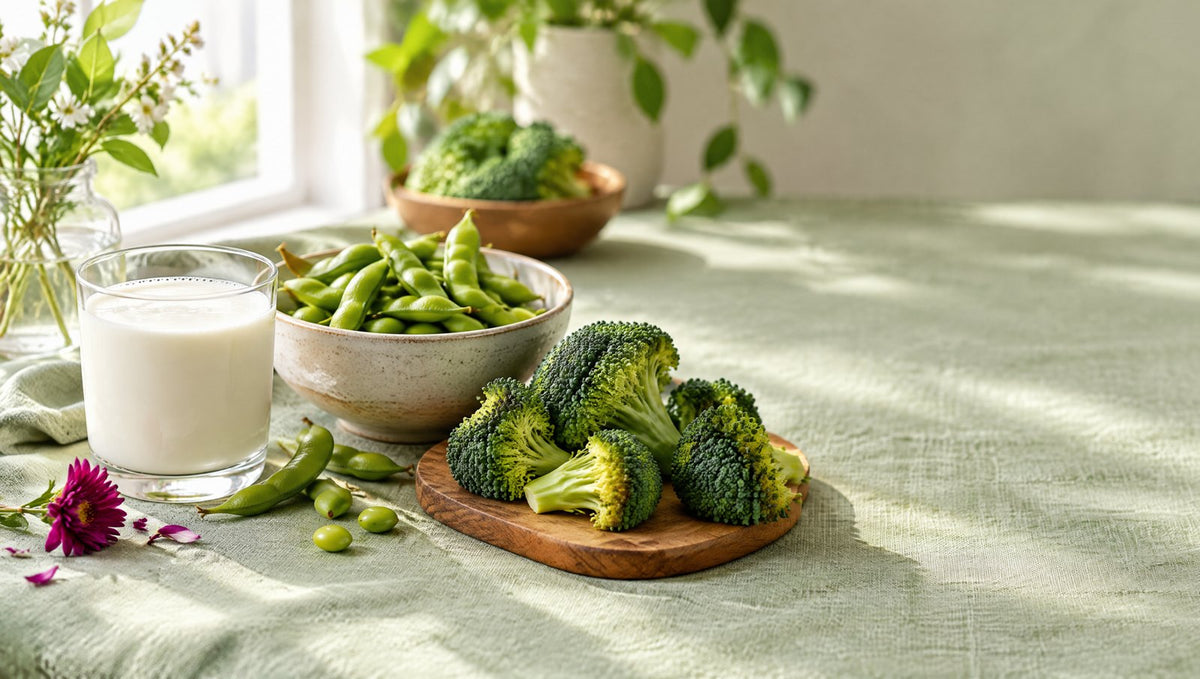
NMN stands for nicotinamide mononucleotide. It is a naturally occurring molecule found in small amounts in foods such as edamame, broccoli and avocado.
NR stands for nicotinamide riboside. It is a form of vitamin B3 and is also found in small amounts in some foods, such as milk.
Researchers describe both molecules, and how the body handles them, in a review of NMN and NR biology in Cell Metabolism. The authors note that NMN and NR "can exhibit distinct behavior," depending on the tissue and the enzymes present.
How does each one become NAD+?
Think of NAD+ as the finished dish. NMN and NR are both ingredients, but NR needs one more step of preparation.
According to a 2023 review in Science Advances, once NR is inside a cell, enzymes called NR kinases can turn it into NMN. The cell then turns NMN into NAD+.
The same review points out that most NR taken by mouth is broken down in the small intestine before it reaches the cells. It turns into nicotinamide, another form of vitamin B3. So the route is less direct than the simple diagram suggests.
NMN vs NR at a glance
| NMN | NR | |
|---|---|---|
| Full name | Nicotinamide mononucleotide | Nicotinamide riboside |
| Type | NAD+ precursor | NAD+ precursor, a form of vitamin B3 |
| Steps to NAD+ inside the cell | One | Two (NR to NMN, then NMN to NAD+) |
| Found in food | Small amounts in some vegetables and fruit | Small amounts in some foods, such as milk |
| Human research | Growing, mostly small and short trials | Growing, mostly small and short trials |
| What to check on the label | Form of NMN, dose, NPN | Form of NR, dose, NPN |
 Comparing two labels side by side is the best way to see what each product contains.
5 differences between NMN and NR
- The molecule. NMN and NR are different compounds. A label that says "NAD+ booster" can contain either one, so read the medicinal ingredient line.
- The route. NMN sits one step from NAD+. NR is turned into NMN first, and much of it is changed in the gut along the way.
- The research focus. Human studies exist for both. A randomized, placebo-controlled trial in healthy middle-aged adults studied NMN, while the Science Advances review looked at 25 human NR studies.
- The form. Some NMN and NR ingredients are patented and backed by their own research and quality data. Generic powders may not have that history.
- The licence. In Canada, look for an eight-digit NPN on the label. It shows the product has been reviewed and licensed by Health Canada.
Should I take NR or NMN?
There is no single right answer for everyone. Both are NAD+ precursors, and human research on each is still young. The Science Advances reviewers found that NR "has displayed few clinically relevant effects" so far, and warned against exaggerating early results. That caution applies to NMN headlines too.
In practice, many adults weigh three things. How close is the precursor to NAD+? What research stands behind the specific form? Is the product licensed? If you take medication or have a health condition, ask your doctor or pharmacist first.
Can you take NMN and NR together?
Some people ask about stacking the two. There is very little research on taking NMN and NR at the same time, and both feed the same pathway. Taking more than one precursor does not mean you get more benefit.
The safest approach is to choose one licensed product, follow the dose on its label, and talk to your pharmacist before combining supplements. Our NMN dosage guide and our article on when to take NMN explain how to fit one into your day.
 Precursors work best as one part of a routine built on movement, sleep and good food.
What the research can and cannot tell you
It helps to keep expectations realistic. Most human studies on NMN and NR are small and run for weeks, not years. They often measure NAD+ levels in the blood rather than how people feel day to day.
That is why we avoid any product that promises to reverse aging. Our article Will NMN Reverse Aging? looks at what the evidence does and does not show. For the basics of how NMN works in the body, see What NMN Supplements Do.
Our choice: Ultra Premium NMN with Uthever®

We chose NMN, and specifically Uthever®, for our Ultra Premium NMN with Uthever®. The form of the ingredient matters. Uthever® is the most researched NMN in the world, and Uthever® was clinically studied to increase NAD+ by 38% in 60 days.
What our product does, in the words approved by Health Canada:
- Acts as a NAD+ precursor, supporting biological functions vital for good health.
- Aids in energy metabolism and tissue formation.
- Helps maintain the body's ability to metabolize nutrients.
It is Health Canada licensed (NPN 80140941), made in Canada in a cGMP-certified facility, and third-party tested. It is also vegan, GMO-free and gluten-free. You can also find it on Amazon.ca.
Building a healthy-aging routine? You can also explore our Ultra Premium Shilajit with Primavie®, another product in our line built on a patented, clinically studied ingredient.
FAQ
What is the difference between NMN and NR?
Both are NAD+ precursors. NMN (nicotinamide mononucleotide) is one step from NAD+ inside the cell. NR (nicotinamide riboside), a form of vitamin B3, is first turned into NMN and then into NAD+. Much oral NR is also broken down in the gut first.
Should I take NR or NMN?
Both are studied NAD+ precursors, and human research on each is still young. Many adults choose based on how close the precursor is to NAD+, the research behind the specific form, and a Health Canada licence. Ask your doctor or pharmacist if you take medication.
Can you take NMN and NR together?
There is very little research on combining them, and both feed the same pathway. More precursors do not mean more benefit. Choose one licensed product, follow its label, and check with your pharmacist before combining supplements.
Is NMN available in Canada?
Yes. NMN products can be sold in Canada as licensed natural health products. Look for an eight-digit NPN on the label, which shows Health Canada has reviewed the product.
The bottom line
NMN and NR are close cousins. Both help the body make NAD+, but NMN sits one step closer, and NR takes a longer route that often starts in the gut. Neither replaces healthy habits, and early research should be read with care.
If you decide a NAD+ precursor fits your routine, choose a licensed product with a researched form. See miNATURALS Ultra Premium NMN with Uthever®.
This article is for information only and is not medical advice. If you take medication or have a health condition, check with your doctor or pharmacist before starting a supplement.