Mushroom Supplements and Vitamin D: The Perfect Winter Wellness Duo
As winter's frost settles across Canadian landscapes, our bodies face a dual challenge: diminished sunlight exposure and heightened demands on our immune resilience. For women over 40, this seasonal transition often exacerbates nutrient deficiencies, particularly vitamin D, while simultaneously taxing our body's adaptive mechanisms. The convergence of mushroom supplements with vitamin D supplementation presents a synergistic approach to winter wellness that merits deeper exploration.
Understanding the Winter Nutrient Gap
Canada's northern latitude creates a phenomenon where ultraviolet B rays—essential for cutaneous vitamin D synthesis—become virtually non-existent during winter months. Between November and February, even midday sun exposure fails to trigger adequate cholecalciferol production in skin cells. This photobiological reality compounds with age-related changes in dermal vitamin D synthesis capacity, creating a perfect storm for deficiency among women navigating their fourth decade and beyond.
Beyond the sunshine vitamin deficit, winter's physiological stressors demand robust immune surveillance, energy homeostasis, and mood regulation. Our bodies require comprehensive nutritional fortification rather than isolated interventions. This holistic perspective aligns with emerging research demonstrating that micronutrient synergy outperforms singular supplementation strategies.
The Mycological Advantage: Why Mushroom Supplements Matter
Fungi represent one of nature's most sophisticated biological kingdoms, producing bioactive compounds that demonstrate remarkable adaptogenic properties. Mushroom supplements harness these mycochemicals—including beta-glucans, ergothioneine, and triterpenoids—to support cellular resilience and immunomodulation. Unlike synthetic alternatives, these fungal constituents work through multiple physiological pathways simultaneously.
Immune System Fortification
The polysaccharide structures within medicinal mushrooms activate pattern recognition receptors on immune cells, priming our defensive mechanisms without overstimulation. This intelligent modulation proves particularly valuable during winter when respiratory challenges proliferate. Species like Reishi, Turkey Tail, and Cordyceps have demonstrated capacity to enhance natural killer cell activity while maintaining immunological balance—a crucial distinction from crude immune "boosting" that may trigger inflammatory cascades.
Cellular Energy and Mitochondrial Support
Winter fatigue often reflects more than circadian disruption; it signals mitochondrial inefficiency exacerbated by reduced phototherapy and increased metabolic demands for thermogenesis. Certain mushroom varieties, particularly Cordyceps sinensis, contain adenosine precursors and cordycepin that optimize ATP production at the cellular level. This bioenergetic enhancement translates to sustained vitality rather than the ephemeral stimulation provided by caffeine or simple sugars.
miNATURALS Ultra Premium Mushroom Complex: Clinically Validated Support
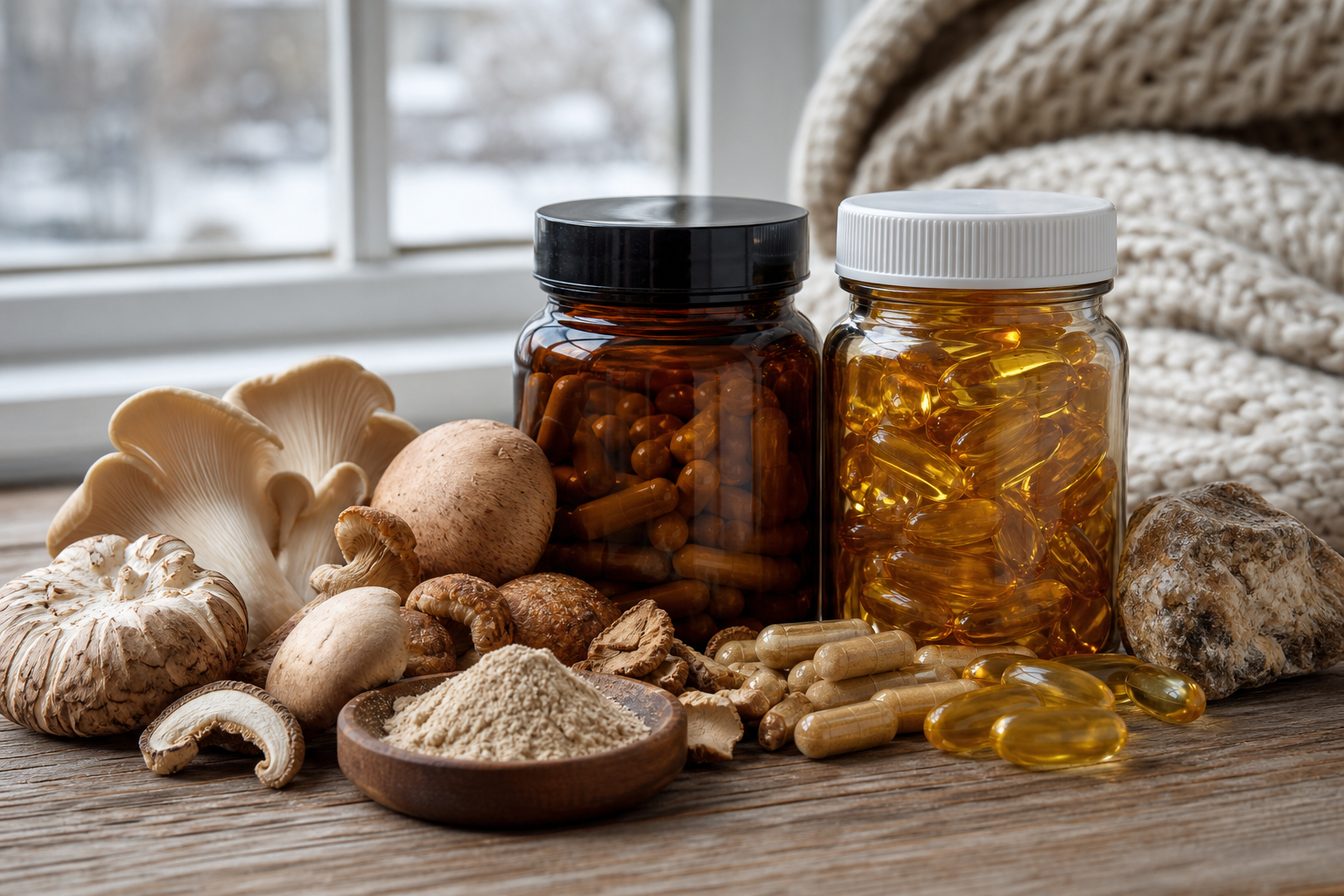
Addressing the complexities of winter wellness requires supplementation that meets rigorous quality thresholds while delivering research-validated efficacy. The miNATURALS Ultra Premium Mushroom Complex with PeakO2® represents a sophisticated formulation combining six organic mushroom species in a clinically studied blend.
This proprietary complex undergoes oxygen-infused fermentation, enhancing bioavailability of fungal compounds that might otherwise pass through the digestive tract unabsorbed. For Canadian women seeking comprehensive winter support, this formulation addresses multiple physiological vectors: immune competence, stress adaptation, cognitive clarity, and sustained energy production. Each batch receives third-party verification and carries Health Canada licensing, ensuring both purity and potency align with label claims.
The absence of fillers, binders, or synthetic additives means every capsule delivers maximum mycological benefit—a consideration particularly important when combating seasonal challenges that demand optimal nutritional density.
Vitamin D: The Calciferol Imperative
While mushroom supplements provide broad-spectrum wellness support, vitamin D operates as a master regulatory hormone influencing over 200 genetic expressions. Its role extends far beyond calcium metabolism into immune function, neurotransmitter synthesis, cardiovascular health, and inflammatory modulation. Deficiency correlates with increased susceptibility to seasonal affective patterns, compromised immune surveillance, and accelerated bone density loss—concerns that intensify for women experiencing perimenopausal and postmenopausal hormonal shifts.
The Recommended Dietary Allowance of 600-800 IU proves woefully inadequate for maintaining optimal serum concentrations, particularly during photopenic winter months. Contemporary research suggests 2000-4000 IU daily may better serve Canadian populations, though individual requirements vary based on body composition, existing levels, and metabolic factors.
Synergistic Mechanisms: How These Nutrients Collaborate
The pairing of mushroom supplements with vitamin D creates complementary physiological effects that exceed the sum of individual benefits. Consider these interactive pathways:
"Vitamin D receptors exist throughout immune tissues, but their activation requires adequate cofactors and cellular energy. Mushroom-derived compounds enhance mitochondrial function while providing immune-modulating polysaccharides that work synergistically with vitamin D's genomic effects to create robust, balanced immunity."
Furthermore, certain mushroom species naturally biosynthesize ergocalciferol (vitamin D2) when exposed to ultraviolet radiation during cultivation. While cholecalciferol (D3) remains the preferred supplemental form, the presence of vitamin D analogues in mushrooms demonstrates nature's integrated approach to micronutrient provision.
Inflammation Management
Chronic low-grade inflammation—often termed "inflammaging"—accelerates with advancing age and seasonal stressors. Vitamin D suppresses pro-inflammatory cytokines while enhancing anti-inflammatory pathways. Simultaneously, mushroom triterpenes and phenolic compounds modulate NF-κB signaling and oxidative stress. This dual-action approach addresses inflammation through complementary mechanisms, providing more comprehensive management than either intervention alone.
Mood and Cognitive Preservation
Seasonal mood fluctuations reflect complex neurobiological changes involving serotonin synthesis, circadian rhythm disruption, and neuroinflammation. Vitamin D influences tryptophan hydroxylase, the rate-limiting enzyme in serotonin production. Meanwhile, Lion's Mane and other nootropic mushrooms stimulate nerve growth factor synthesis and support hippocampal neurogenesis. Together, these nutrients address winter mood challenges through multiple neurological pathways.
Optimizing Your Winter Wellness Protocol
Implementing this nutritional partnership requires attention to timing, dosage, and quality considerations that maximize absorption and efficacy.
Dosage Guidelines and Timing
- Vitamin D supplementation: 2000-4000 IU daily with a fat-containing meal to enhance lipophilic absorption
- Mushroom complex: Follow manufacturer specifications, typically 1-2 capsules daily, preferably with morning nutrition to align with cortisol rhythms
- Consider baseline testing of serum 25-hydroxyvitamin D to personalize vitamin D dosing
- Maintain consistency throughout winter months, initiating protocols in early autumn before deficiency develops
Quality Benchmarks
Not all supplements demonstrate equivalent bioavailability or purity. Prioritize products meeting these criteria:
| Quality Factor | What to Look For |
|---|---|
| Manufacturing Standards | GMP-certified facilities with documented quality controls |
| Third-Party Verification | Independent testing for potency, purity, and contaminant screening |
| Regulatory Compliance | Health Canada Natural Product Number (NPN) or licensing |
| Ingredient Transparency | Clear labeling of mushroom species, extraction methods, and active compound concentrations |
| Vitamin D Form | Cholecalciferol (D3) rather than ergocalciferol (D2) for superior bioavailability |
Frequently Asked Questions
Can mushroom supplements replace vitamin D supplementation?
While some mushroom varieties contain vitamin D2, the concentrations prove insufficient to meet therapeutic requirements for deficiency correction. Mushroom supplements and dedicated vitamin D3 supplementation serve complementary rather than interchangeable roles in comprehensive winter wellness strategies.
Are there any contraindications for combining these supplements?
Generally, mushroom supplements and vitamin D demonstrate excellent safety profiles with minimal interaction potential. However, individuals taking immunosuppressive medications, anticoagulants, or managing specific health conditions should consult healthcare providers before initiating new supplementation protocols. Mushroom varieties may theoretically enhance or modify certain pharmaceutical effects.
How long before experiencing noticeable benefits?
Vitamin D repletion typically requires 8-12 weeks of consistent supplementation to normalize serum concentrations and manifest physiological improvements. Mushroom supplement effects vary by individual and specific outcome measures—energy enhancement may emerge within 2-3 weeks, while immune resilience develops more gradually over 4-8 weeks of regular consumption.
Building Sustainable Winter Wellness
Supplementation represents one component of holistic seasonal health optimization. Integrating nutritional support with lifestyle modifications amplifies benefits and creates resilient physiological foundations.
Prioritize protein-rich nutrition to support vitamin D transport and utilization. Engage in outdoor activity during peak sunlight hours, even when UV indices prove inadequate for vitamin D synthesis—the phototherapy benefits circadian rhythm entrainment and mood regulation. Implement stress-management practices that complement adaptogenic mushroom effects, such as meditation, therapeutic breathing, or restorative movement.
Sleep hygiene assumes particular importance during extended darkness periods. Maintain consistent sleep-wake schedules, minimize evening blue light exposure, and consider morning bright light therapy to support melatonin-cortisol balance.
The miNATURALS Commitment to Winter Wellness
Navigating supplement selection amid market saturation demands discernment and access to transparent, research-validated options. miNATURALS Nutrition Inc. addresses this challenge through unwavering commitment to quality benchmarks that exceed regulatory minimums. Every formulation undergoes rigorous third-party testing, ensuring freedom from heavy metals, microbial contamination, and undeclared ingredients.
The company's Canadian foundation means products specifically address the nutritional challenges facing northern populations experiencing extended winters and limited phototherapy. This geographical relevance translates to formulations designed for the precise physiological demands confronting Canadian women over 40.
By combining clinically backed mushroom complexes with strategic vitamin D supplementation, you create a winter wellness foundation that supports immune competence, sustained energy, balanced mood, and cellular resilience. This nutritional partnership represents not merely symptom management but proactive optimization of the adaptive mechanisms that determine how gracefully we navigate seasonal transitions.
Winter need not signify withdrawal and depletion. With informed supplementation strategies rooted in mycological wisdom and micronutrient science, the cold months can become a season of sustained vitality and robust wellness.